Image

NCC PRESENTING THE SUCCESS STORY
NCC SPAIN
💡 Success Story in Deciphering GPCR Dynamics with AI & HPC!
📋 "AlphaGPCR - Large-scale simulation and analysis of AI-derived GPCR structures" led by Jana Selent from Instituto Hospital del Mar de Investigaciones Médicas (IMIM)
Client/User Profile:
Researchers and scientists in the field of molecular biology, biochemistry, and pharmacology, particularly those involved in drug discovery and the study of G-protein-coupled receptors (GPCRs).
IMPACT:
The AlphaGPCR project has the potential to revolutionize the understanding of GPCRs and their role in various diseases, which could lead to the creation of new, more effective, and personalized drugs.
BENEFITS:
Improved understanding of GPCRs: The project provides a more comprehensive view of GPCR dynamics, including the role of flexible regions in receptor function.
Advances in drug design: The identification of novel structural states and the prediction of orphan GPCR function can significantly improve drug design targeting these receptors.
Access to valuable data: The publication of the resulting data through GPCRmd will facilitate access to valuable information for the scientific community.
KEY POINTS BEFORE AGREEING ON THE PROJECT:
• Clear objectives: It's essential to define the project's objectives, including what is expected to be achieved with the GPCR simulations and how the results will be validated.
• Computational resources: The project requires access to high-performance computational resources, such as the MareNostrum5 supercomputer, to perform large-scale simulations.
• Interdisciplinary collaboration: The combination of AI and molecular dynamics simulations requires collaboration among experts from different fields, including bioinformatics, molecular biology, and computational chemistry.
Data management plan: Due to the large amount of data generated, it's crucial to have a plan for storing, managing, and sharing the resulting data.
TECHNICAL/SCIENTIFIC CHALLENGE:
G-protein-coupled receptors (GPCRs) are key for many processes such as vision, taste or hormone signaling. They're also a major target for drug discovery, as many drugs act on them, but many GPCR structures and how they function are still unknown.
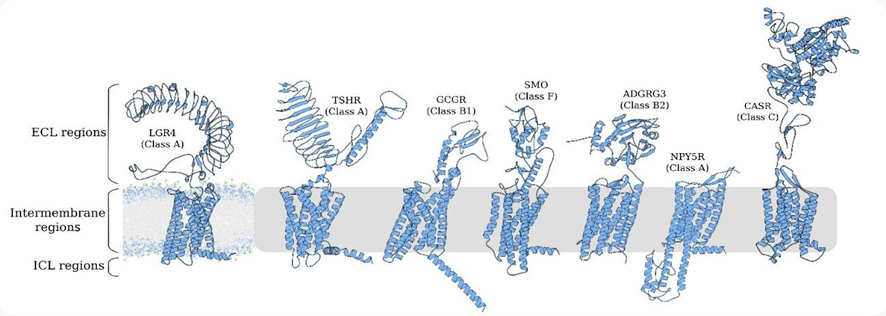
The AlphaGPCR project combines hashtag#AI and Molecular Dynamics simulations to study GPCRs at an unprecedented scale. By using AI models, they could include flexible loops, regions often unresolved that play a critical role in receptor function, to obtain a more complete picture of GPCR dynamics.
SOLUTION:
🖥️ Thanks to RES supercomputer hashtag#MareNostrum5Acc from Barcelona Supercomputing Center they were able to simulate 402 different GPCRs, capturing both their active and inactive states.
The results revealed how flexible loops influence ligand-binding sites and contribute to receptor activation and deactivation mechanisms. Additionally, they identified novel structural states that could improve drug design and even predict the function of the still unknown orphan GPCRs. All the resulting data will be shared via GPCRmd.