Image

NCC presenting the success story
NCC Spain
🧬💡Success Story about the limits of synthetic DNA💡🧬
📋 "Photochemical and photophysical profile of the artificial Hachimoji nucleobase Z" led by Inés Corral from Universidad Autónoma de Madrid
Hachimoji DNA is an artificial 8-letter genetic system that is thermodynamically stable and capable of storing and translating genetic information. Since it has 8 nucleobases, instead of 4 as natural DNA, it holds great potential in biotechnology, genetics and digital information storage.
However, nucleobase Z in Hachimoji DNA may not be photostable, which may lead to critical issues such as DNA damage or mutations when working under light. This project focused on studying this artificial Z, which contains a pyridine ring that alters its photophysical properties.
🖥️ Thanks to RES Supercomputer #MareNostrum5 from Barcelona Supercomputing Center, the team used non-adiabatic molecular dynamics simulations to:
🔹 Track Z’s real-time excited-state behavior
🔹 Identify dominant deactivation mechanisms
🔹 Estimate its excited-state lifetimes and photostability
The simulations suggest that Z is not photostable, limiting its potential use in synthetic biology or long-term data storage without further chemical modifications or protection strategies.
CLIENT/USER PROFILE:
Researchers and scientists in the field of synthetic biology, genetics, and biotechnology, particularly those involved in the development of artificial genetic systems and the study of their properties.
IMPACT:
The project has the potential to significantly impact the development of synthetic biology and biotechnology applications, particularly those involving the use of artificial genetic systems like Hachimoji DNA.
BENEFITS:
Understanding the limitations of Hachimoji DNA: The project provides valuable insights into the photostability of the artificial nucleobase Z, highlighting potential limitations and areas for improvement.
Informing the design of new artificial genetic systems: The results of the project can inform the design of new artificial genetic systems with improved photostability and functionality.
Advancements in synthetic biology: The project contributes to the development of synthetic biology by exploring the properties and limitations of artificial genetic systems.
KEY POINTS BEFORE AGREEING ON THE PROJECT:
Clear objectives: Defining the project's goals, including the specific research questions to be addressed and the expected outcomes.
Computational resources: Ensuring access to sufficient computational resources, such as the MareNostrum5 supercomputer, to perform the required simulations.
Interdisciplinary collaboration: Collaborating with experts from various fields, including synthetic biology, chemistry, and physics, to ensure the project's success.
TECHNICAL/SCIENTIFIC CHALLENGE:
The project faced the challenge of understanding the photophysical properties of the artificial nucleobase Z, particularly its photostability, which is critical for its potential applications.
SOLUTION:
The team utilized non-adiabatic molecular dynamics simulations on the MareNostrum5 supercomputer from Barcelona Supercomputer Center to study the excited-state behavior of Z, identify dominant deactivation mechanisms, and estimate its excited-state lifetimes and photostability. The simulations revealed that Z is not photostable, highlighting the need for further chemical modifications or protection strategies to improve its stability.
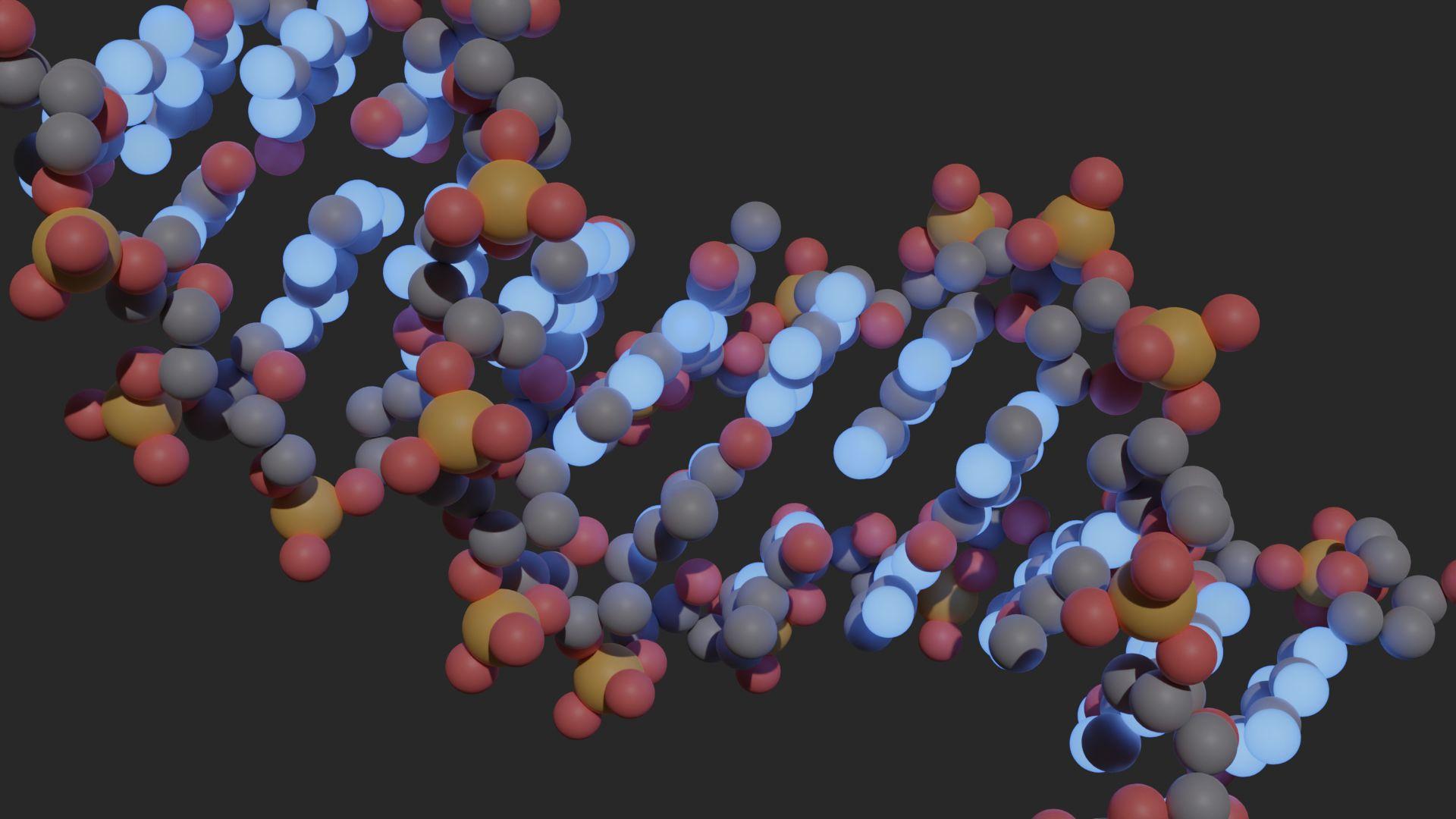
📸 The image shows a render of Hachimoji DNA.