Image
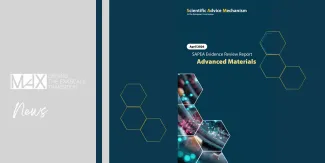
A working group of 22 experts from across Europe has been mandated by the European Commission to contribute to a Scientific Opinion on advanced materials. Their work, published in an Evidence Review Report, confirms Europe’s leading role in first-principles simulation while pointing to a critical need: the development of high-quality, specialised datasets to enable AI-driven materials discovery.
In recent months, advanced materials have moved to the forefront of the European policy agenda. This development follows the new mandate of the European Commission, where advanced materials were identified as a strategic priority. As a consequence, between June and December 2025, a team of 22 experts from the materials science landscape were appointed by the European Commission to assess Europe’s position in the field. The conclusion of the researchers, delivered in April, highlights a clear message: Europe has strong capabilities in computational modelling and first-principles simulations, but must reinforce its data ecosystem to fully exploit artificial intelligence in materials research.
The role of Nicola Marzari and MaX
MaX partner Nicola Marzari, Director of NCCR MARVEL, contributed directly to the Evidence Review Report as co-lead of the chapter on data, simulations and AI. He also contributed to the PRACE Scientific and Innovation Case for Computing in Europe (2026–2034).
His work reflects a consistent approach: recognising Europe’s strength in simulation while identifying the need to develop high-quality computational datasets and new AI models. This perspective is closely aligned with the activities of the MaX Centre of Excellence, which has long focused on simulation methods, data infrastructures, and computational workflows.
Main findings of the report
The report confirms that Europe is a global leader in simulation-driven materials science. Computational tools developed in Europe are widely used and allow accurate prediction of materials properties, supporting both discovery and design.
At the same time, several structural challenges remain. Research and innovation systems are still fragmented across countries, private investment is lower compared to the United States and Asia, digitalisation in materials development is limited, and many innovations do not progress efficiently from laboratory research to industrial application. In addition, there is a shortage of skills adapted to future needs.
The shift towards data and AI
A key message of the report is the ongoing transition to data-driven materials science. First-principles simulations generate large and reliable datasets, which are essential for training AI models. However, these data resources are not yet sufficient.
There is a need for more curated, domain-specific datasets, developed according to FAIR principles. The integration of simulation and AI is already transforming materials discovery, enabling faster exploration, early risk assessment, and the development of digital twins and automated laboratories.
High-performance computing plays a central role in this context. The PRACE report identifies simulation workflows and data management as priority areas and emphasises the need to ensure broader access to infrastructures, models, and datasets.
Next steps
The recommendations emerging from this work are clear:
- improve data quality and data infrastructures
- extend the use of AI and simulation in materials design
- strengthen collaboration between research and industry
- support the transition from discovery to production
- invest in skills and training
These actions respond to a central question raised by the European Commission: how Europe can lead in advanced materials development instead of relying on technologies developed elsewhere.
Europe’s leadership in computational materials science is well established. The next phase will depend on its ability to structure data ecosystems and integrate simulation, data, and AI into a coherent framework that supports both research and industrial deployment.
References
Advanced Materials: Evidence Review Report – Scientific Advice Mechanism, published on 21 April 2026.
DOI: 10.5281/zenodo.18222345