
Image
Natural hazard mitigation with HPC
Natural disasters have been a constant threat for humankind – think of earthquakes, volcano eruptions or tsunamis. In the age of rapid climate change, some kinds of hazards are getting both more frequent and more violent: Forest fires, heavy rains, storms and flooding, air and river pollution, or heat waves and droughts.
We can’t directly influence or stop any of those event when they happen – but it turns out that simulations backed by high performance computers can be quite helpful in devising emergency action, predict events and issue timely warnings, inform those in charge on how to best prepare to minimize negative impact, or – in some cases - how to reduce the risk of events occurring altogether: Action on these risks is one of the EU’s priorities.
One example we all know and use every day – maybe without even realizing that HPC is involved – are weather forecasts: Here meteorology is used since decades and does good service in predicting not only normal weather but also warns about storms, heavy rainfall or extreme heat. But there’s more in the toolbox than is commonly known and used.
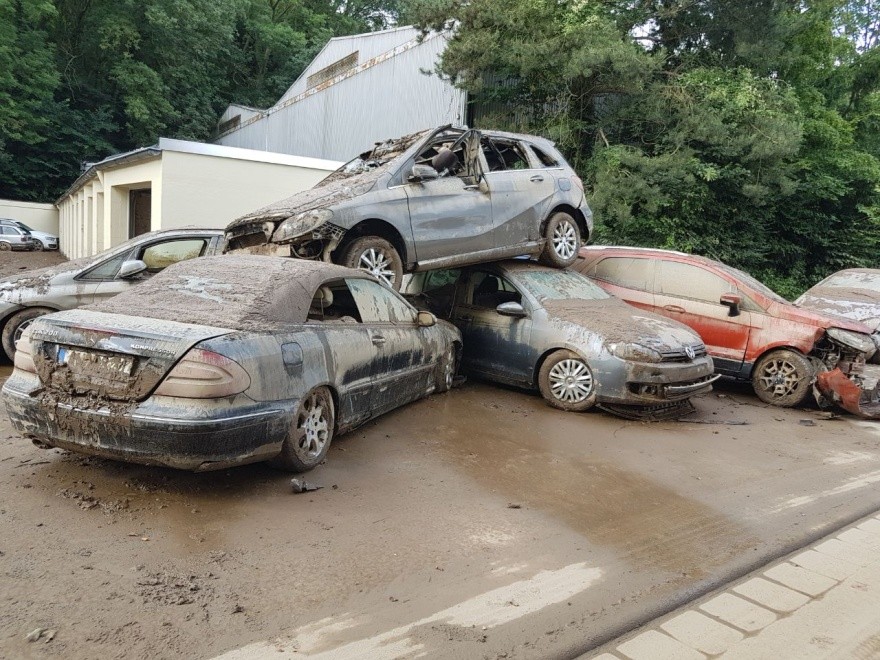
One striking example in the last few years is the devastating flooding in the Ahr valley in Germany in Summer 2021: Heavy rains in a narrow valley caused an enormous flooding. While the rain was predicted, the actual amount and effect of the flooding wasn’t, resulting in about 150 casualties – though in principle all tools were available to predict this event and evacuate people. A flooding with a similar death toll hit southern Spain in October 2024.
Can we avoid or limit, if not the events themselves, then as least the deadly consequences of by timely predictions?
For starters, besides weather prediction, there’s much more in the toolbox (and more applications are listed below):
- CoE ChEESE-2P develops applications to predict Tsunami waves, lava flow, ash dispersion of volcano eruption, and other geophysical modeling tools
- Applications of CoE HiDALGO2 can predict urban air pollution, heat and local wind effects, spread of wildfires and smoke, and pollution transport in rivers
- The ESiWACE-3 CoE has a range of high-resolution climate models in its portfolio that can help to predict regional likelihood of extreme weather in the long term and thus inform on adaptation strategies (in addition to globally limiting climate change to a minimum through appropriate measures).
- EoCoE III – while focussing on energy applications – features Parflow as one HPC code, which covers a broad range of groundwater and surface water induced phenomena.
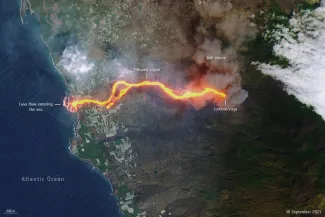
Many actual use cases underline the usefulness of those applications: In Stockholm, HPC was used to analyse air pollution in a project initiated with Nation Competence Center (NCC) Sweden (ENCCS) and which was taken a step further using the Urban Air Project workflow by CoE HiDALGO2). During the eruption of the volcano Cumbre Vieja, local authorities of La Palma were advised regarding the prediction of dispersion of volcanic ashes and related dangers for the population by CoE ChEESE.
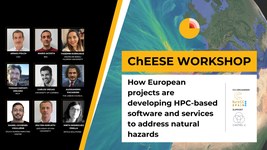
Further examples can be found in the compilations of use cases and success stories from the NCCs, for instance on using AI & satellite data for improved local weather forecasts, or building a database of climate-induced severe weather events for insurance companies. A recent workshop on natural hazard simulations organized by ChEESE-2P highlighted many more examples.

A longer-term goal would be to establish systematic support for using these tools routinely and generally, as it is standard for weather prediction. Doing so would require more than just having the software codes sitting somewhere – as most of these events arise without much prior notice, we need to be able to instantly fire up a simulation programs (“urgent computing”) , with direct access to the necessary data to set up the case-specific models for the simulation in an automated way. Some European CoEs also work in this direction, for instance testing urgent computing in real-live excercises (see below, in use cases). But it is still a long way to go.
Resources
Below, find a hub with pointers to relevant success stories, use cases, events, and codes of NCCs and CoEs.
Selected Success stories
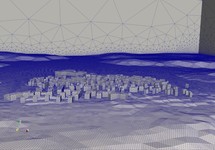
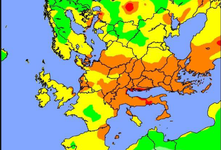
- Predict the damage to infrastructures caused by storms and map more precisely the risk of claims for insurances (NCC France)
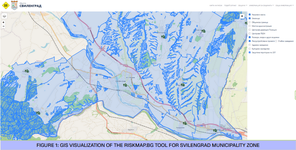
- Wildland fire behaviour modelling in support of Svilengrad municipality firefighting and civil protection efforts (NCC Bulgaria)
- Analysing Air Pollution Flow (NCC Sweden – ENCCS)
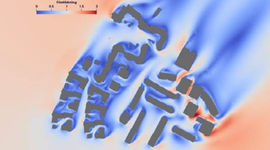
- High-resolution urban wind comfort computation for the entire city of Stockholm (CoE HiDALGO2)
- Supercomputer applications in environmental modelling (NCC Bulgaria)
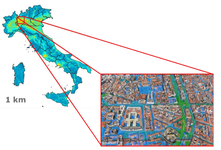
- QualeAria-Local – Air quality (NCC Italy)
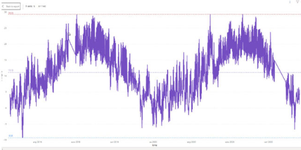
- Environmental Data from Transferring and Analytics to Decision Making (NCC Bulgaria)

Use cases
Use cases highlight potential application areas and scenarios for a particular workflow, code or portfolio of closely related applications.
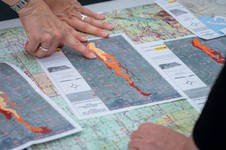
- Wildfires
- Material transport in water
- Urban Air Project
- Mexico’s National Earthquake Drill
- 1st Spanish volcano eruption drill



Events
- Natural Hazard Preparedness with HPC, CoE ChEESE-2P, NCC Spain, CASTIEL2, 10/12/2024
- Global Challenges and Built Environments – Discover 4 HPC Applications & Use Cases, CoE HiDALGO2, NCC France, 26/01/2026

Videos
Several relevant codes of the CoEs have been presented in a Code of the Month session.
- Code of the Month 08: ChEESe-2P on simulation of volcano eruptions (OpenPDAC and FALL3D)
- Code of the Month 09: HiDALGO2 on Urban Air Pilot
- Code of the Mont 15: EoCoE III on Parflow


Selected Codes
Earthquakes & tsunamis
- SeisSol Simulation of complex earthquake and earthquake-tsunami events_ (CoE ChEESE-2P)
- ExaHyPE Earthquake simulation model, landslide/tsunami model in development (CoE ChEESE-2P)
- TANDEM Simulation of sequences of earthquakes and aseismic slip_. (CoE ChEESE-2P)
- SPECFEM3 Simulation of earthquake events, seismo-acoustic simulation and seismic imaging (CoE ChEESE-2P)
- HySEA suite Tsunamis: generated by earthquake, aerial, submarine landslide, and meteo-tsunamis (CoE ChEESE-2P)
Volcanoes & geodynamics
- FALL3D Forecast & re-analysis of atmospheric dispersal phenomena (e.g. from volcanic eruptions) (CoE ChEESE-2P)
- OpenPDAC Explosive eruption phenomena incl. blasts, ash dispersal, pyroclastic flows, ballistic ejection (CoE ChEESE-2P)
- LAMEM geomechanics such as mantle-lithosphere interaction (CoE ChEESE-2P)
Water & flooding
- ELMER/ICE Glaciers, Ice-flow, permafrost and groundwater (CoE ChEESE-2P)
- Parflow Groundwater modelling framework (CoE EoCoE III)
Material transport in water Simulation of pollutant transport (CoE HiDALGO2)
Fires
Wildfire workflow Assess the risk and potential impacts induced by mesoscale and microscale fire behaviour in the vicinity of and within wildland–urban interface (WUI) zones. (CoE HiDALGO2)
Atmosphere, weather & climate system
- Urban Air Project Analysis and prediction of pollution dispersion scenarios, urban wind comfort computations (CoE HiDALGO2)
- ICON Climate and Weather prediction model used in production (CoE ESiWACE-3)
- IFS Global weather prediction model (CoE ESiWACE-3)
- NEMO Oceanographic, forecasting and climate studies (CoE ESiWACE-3)
- EC-Earth4 Earth system model for climate projections & predictions (CoE ESiWACE-3)